You’ve probably seen perfectly aligned, uniform smiles, almost too flawless to be real, and wondered if veneers could do the same for you. But veneers aren’t the right fit for everyone or for every issue. Here’s how to know if they’re the right solution for your situation.
What exactly is a dental veneer?
A veneer is a thin shell, usually made of porcelain or composite, bonded to the visible surface of a tooth to change its appearance. Two materials dominate the market, each with its own advantages.
Porcelain veneers give a very natural look and hold up well against staining over time. However, they require more preparation of the tooth, meaning some enamel has to be removed, which makes the treatment irreversible. A lab turnaround time is also needed before you receive the final veneers.
Composite veneers are shaped directly on the teeth and applied in a single visit. What’s more, they generally cost less. On the other hand, they’re more prone to staining and have a shorter lifespan, which often means more frequent touch-ups or earlier replacement.
The right choice depends on your expectations, your budget, and the number of teeth being treated.
Cosmetic issues veneers can correct
Veneers are versatile and can address several types of imperfections at once, including:
- Stubborn discolouration: deep staining that no longer responds to traditional whitening, often caused by certain medications or old dental trauma.
- Cracks and small fractures: superficial lines or chips that affect appearance without requiring a full tooth restoration.
- Gaps between teeth: minor diastemas, particularly between the front teeth, can be closed without orthodontics.
- Irregularly shaped teeth: teeth that are too short, too pointed, or uneven in proportion can be evened out.
- Minor misalignment: slight rotations or overlaps that don’t always require full orthodontic treatment.
Requirements to meet before getting veneers
Veneers aren’t a one-size-fits-all solution. Certain conditions need to be met for the treatment to succeed and last.
Stable oral and gum health. Any active decay or gum disease must be treated before veneers are placed. Bonding a veneer onto a compromised tooth only masks a problem that will keep progressing underneath.
Controlled bruxism. Uncontrolled teeth grinding or clenching puts significant pressure on veneers, which can then chip or come loose prematurely. If you have bruxism, wearing a protective night guard is generally recommended.
Enough healthy enamel. Porcelain veneers require removing a thin layer of enamel. If the enamel is already too thin or damaged, another cosmetic approach may be more suitable.
Realistic expectations. Veneers improve appearance, but they don’t replace orthodontic treatment for significant misalignment, or restorative treatment for active dental problems.
A decision made through consultation
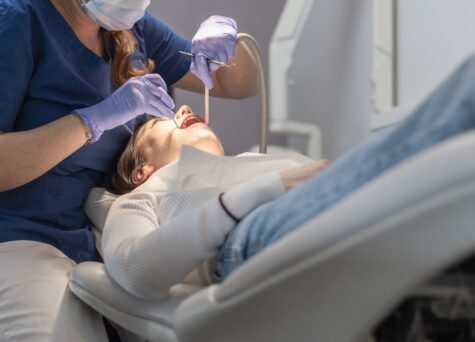
The only way to know whether veneers are right for you is a full evaluation with your dentist, including an exam of your teeth, gums, and bite. At Le Dentalis, this evaluation helps determine not only whether veneers are the right option, but also which material and approach best suit your smile and your lifestyle.